
Autonomous vehicles (AVs) are transforming the future of transportation, with Machine Learning (ML) playing a crucial role in their development. ML algorithms enable self-driving cars to perceive their environment, make real-time decisions, and enhance driving safety. However, despite significant progress, challenges remain in achieving full autonomy. This article explores how ML powers autonomous vehicles, the obstacles they face, and the latest innovations driving the industry forward.
1. How Machine Learning Powers Autonomous Vehicles
Perception and Environment Mapping
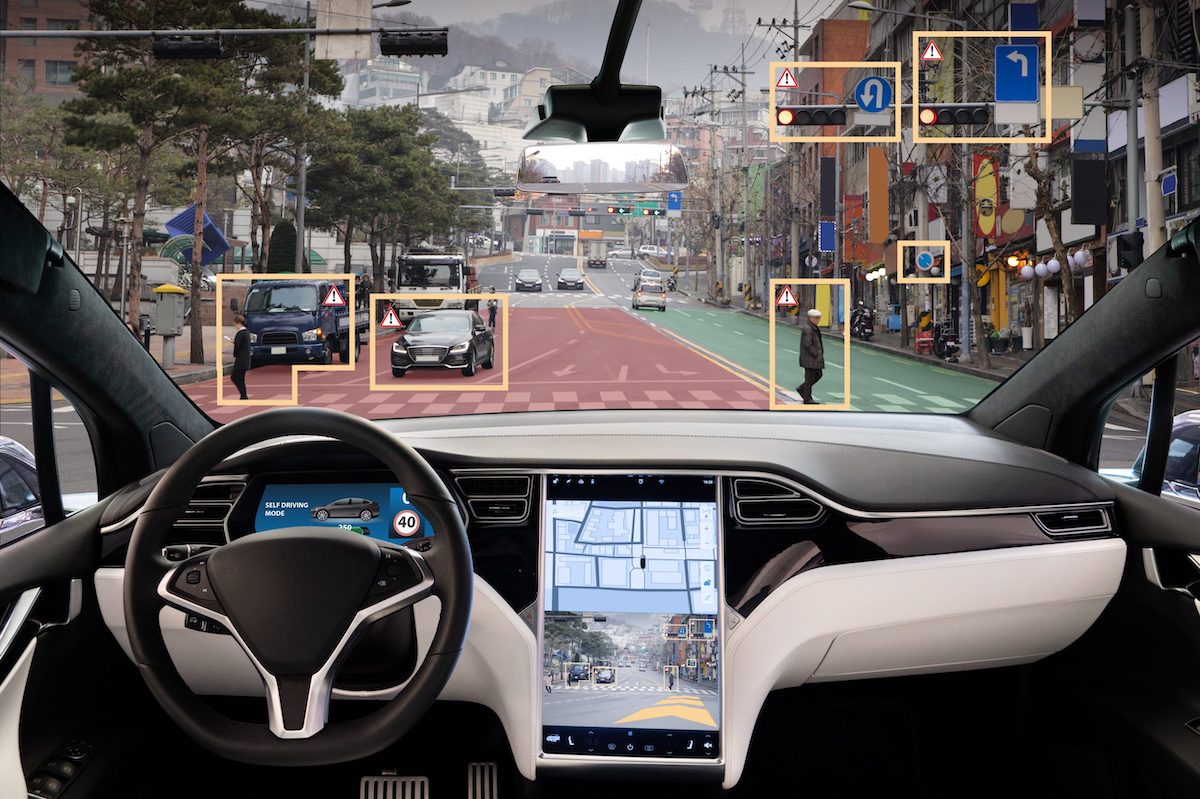
Autonomous vehicles rely on ML-driven perception systems to interpret their surroundings. Using data from LiDAR, cameras, radar, and ultrasonic sensors, these systems detect objects, pedestrians, and road conditions. Convolutional Neural Networks (CNNs) help process images and recognize traffic signs, lane markings, and obstacles with high accuracy.
Path Planning and Decision-Making
Reinforcement Learning (RL) allows self-driving cars to make intelligent decisions based on past experiences. By analyzing vast amounts of driving data, ML models optimize navigation, adjust speed, and respond to dynamic traffic scenarios. Algorithms predict the movement of other vehicles and pedestrians, reducing the risk of accidents.
Control and Motion Planning
ML-powered motion planning ensures smooth and safe driving. Algorithms calculate optimal acceleration, braking, and steering actions to maintain stability and avoid collisions. Predictive modeling helps AVs anticipate road conditions and adjust their behavior accordingly.
2. Challenges in Machine Learning for Autonomous Vehicles
Data Collection and Processing
Training ML models for AVs requires massive datasets covering diverse road conditions, weather patterns, and driving behaviors. However, gathering and labeling this data is time-consuming and expensive. Additionally, real-world scenarios often introduce unpredictable variables that ML models struggle to handle.
Edge Cases and Uncertainty Handling
One of the biggest hurdles is dealing with rare or unexpected situations, such as erratic human behavior, sudden obstacles, or adverse weather. Traditional ML models may not generalize well to these edge cases, leading to safety risks.
Regulatory and Ethical Concerns
Autonomous driving raises legal and ethical questions. Who is responsible in case of an accident? How should AVs prioritize safety in unavoidable collision scenarios? Governments and industry leaders are working to establish standardized regulations to address these issues.
Cybersecurity and Data Privacy
Since AVs rely on cloud connectivity and real-time data sharing, they are vulnerable to cyberattacks. Hackers could potentially manipulate ML models, causing safety breaches. Ensuring robust security measures and data encryption is essential.
3. Innovations Driving Autonomous Vehicle Development
Simulated Training with AI
To overcome data limitations, companies use AI-driven simulation environments to train AVs in virtual settings. These simulations mimic real-world scenarios, allowing ML models to improve their learning without physical road testing.
Federated Learning for Data Sharing
Federated Learning enables multiple AVs to learn from shared data while maintaining privacy. Instead of transferring raw data to a central server, vehicles process data locally and share only model updates, enhancing security and efficiency.
5G and Edge Computing Integration
High-speed 5G networks and Edge Computing reduce latency in AV decision-making. These technologies enable real-time communication between vehicles, traffic infrastructure, and cloud servers, improving situational awareness.

Explainable AI for Transparency
As ML models become more complex, Explainable AI (XAI) helps increase transparency in AV decision-making. XAI techniques allow engineers to understand how models arrive at conclusions, improving trust and accountability.
Machine Learning is at the heart of autonomous vehicle innovation, driving advancements in perception, decision-making, and control. However, challenges such as data limitations, safety concerns, and regulatory issues must be addressed before full autonomy becomes a reality. With ongoing research and emerging technologies like AI simulations, federated learning, and 5G integration, the future of self-driving cars looks promising. As ML continues to evolve, autonomous vehicles will become safer, more reliable, and a mainstream mode of transportation.